Resources
Business Model Canvas
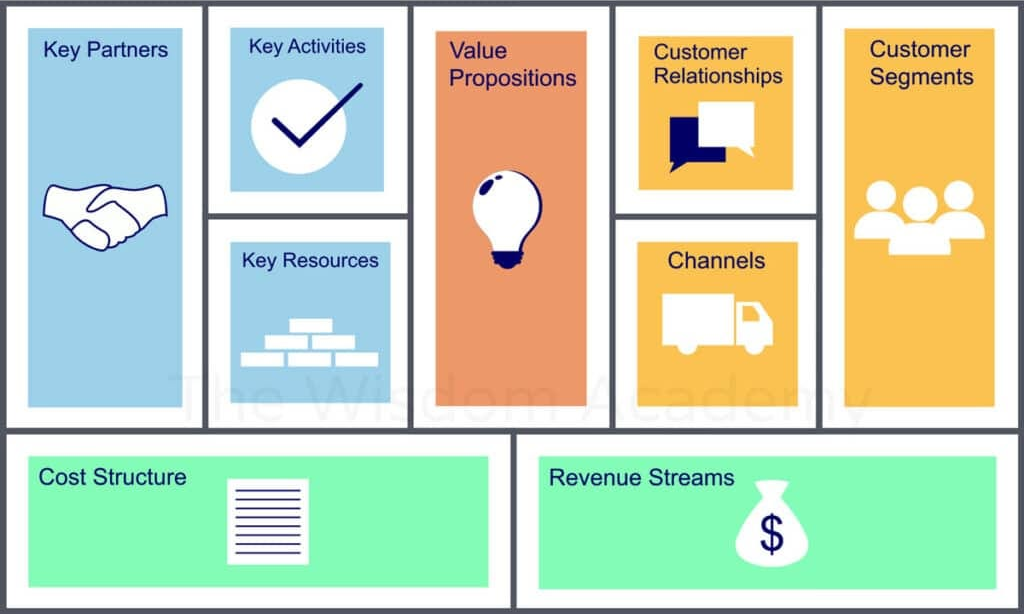
(p. 11)
Value Proposition
Definition of the value we want to deliver. (p. 14)
- What value do we deliver?
- What problem are we solving?
- Which needs are we satisfying?
- How are we different from our competitors?
- What bundles of products/services are we offering to each customer segment?
Examples: Newness, Performance, Customization, Convenience, Status, Price, Accessibility
Customer Segments
The different groups of people or organizations we aim to serve. (p. 15)
- For whom are we creating value?
- Who are our most important customers?
- What are the characteristics of each segment?
- What are their needs and behaviors?
Examples: Mass market, Niche market, Segmented (e.g. concurrent B2B & B2C), Diversified, Multi-sided platforms
Distribution Channels
How we deliver value to customers. (p. 16)
- Through which channels do our customer segments want to be reached?
- Which ones work best?
- Which ones are most cost-efficient?
- How are we reaching them now?
- How are our channels integrated?
- How are we integrating them with customer routines?
Examples: Direct sales, Online sales, Partner stores, Wholesalers & Retail, Own Stores
Customer Relationships
How do we keep customers, and who do we want to keep? (p. 17)
- Relationship expectations of each customer segment?
- How are these relationships integrated with our business model?
- How costly are they?
Examples: Personal assistance, Self-service, Automated service, Communities, Co-creation
Key Resources
The assets required to deliver the value proposition. (p. 18)
- What resources are necessary for our value proposition?
- What’s necessary for our distribution channels, customer relationships, and revenue streams?
Types: Physical, IP, Human, Financial
Key Activities
The most important actions to deliver the value proposition. (p. 19)
- What activities are crucial for our value proposition, what’s most important?
- What key acitivities do our disitribution channels, customer relationships, and revenue streams require?
- Can any be outsourced?
- How do these align with out overall strategy?
Categories: Production, Problem solving, Platform/network
Key Partnerships
The network of suppliers and partners that help the business model function. (p. 20)
- Who are important partners and suppliers?
- Which resources are we acquiring from partners, what activities do they perform?
- What motivates our partners to collaborate?
- Which risks do we face, how to we mitigate them?
- Are there strategic partnerships we should consider purssuing?
Motivations: Optimization & economy of scale, Reduction of risk & uncertainty, Acquisition of resources & activities
Examples: Strategic alliances, Coopetition, Joint ventures, Buyer-supplier relationships
Cost Structure
The major costs involved in operating the business model. (p. 21)
- What are the most significant costs in our business model?
- What’s the investment period, which fixed and variable costs do we have?
- Any opportunities to reduce cost?
- How do business model changes impact our cost structure?
- What are potential risks associated with our cost structure?
Is our business: Cost-driven (minimizing costs wherever possible) or Value-driven (focused on creating value regardless of cost)?
Characteristics: Fixed costs, Variable costs, Economies of scale, Economies of scope
Revenue Streams
The ways the business generates income from each customer segment. (p. 22)
- For what value are our customers willing to pay, what are they currently paying for?
- How are they currently paying, how would they prefer to pay?
- How large is each revenue stream, which ones are most profitable?
- Opportunities to diversify?
- Trends that could impact future revenue streams?
Types: Sales, Subscriptions, Rent, Licensing, Brokerage fees, Advertising
Fixed Pricing: List price, Product feature dependent, Customer segment dependent, Volume dependent
Dynamic Pricing: Negotiation, Yield management, Real-time market
Example: Coca-Cola
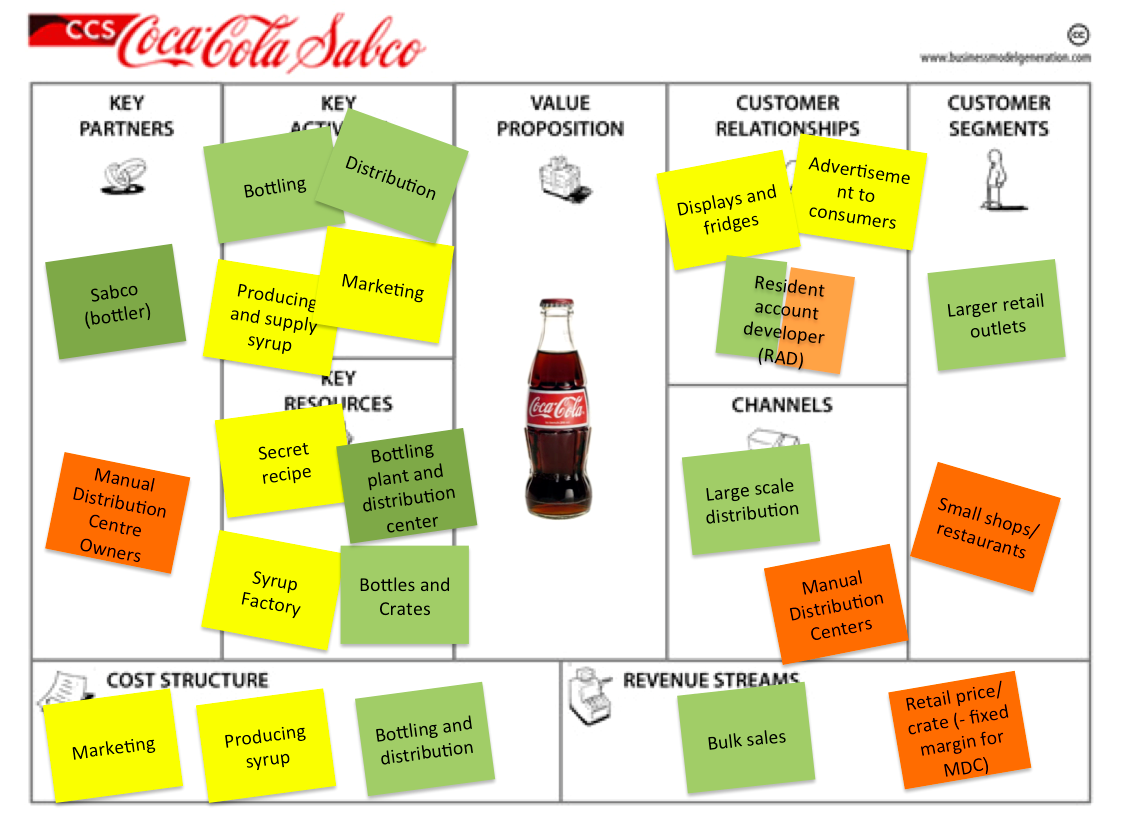
Multi-Sided Business Models
Serve two or more interdependent customer segments, where users may not be customers.
- Value is created for users, who attract customers.
- Revenue is generated from customers paying to reach users.
- Value is captured in derivative currency like data, attention, user-generated content
- It’s sometimes critiqued that these secondary markets are not transparent enough
Examples: Marketplaces (eBay), Platforms (iOS), Media (Facebook)
Sustainability
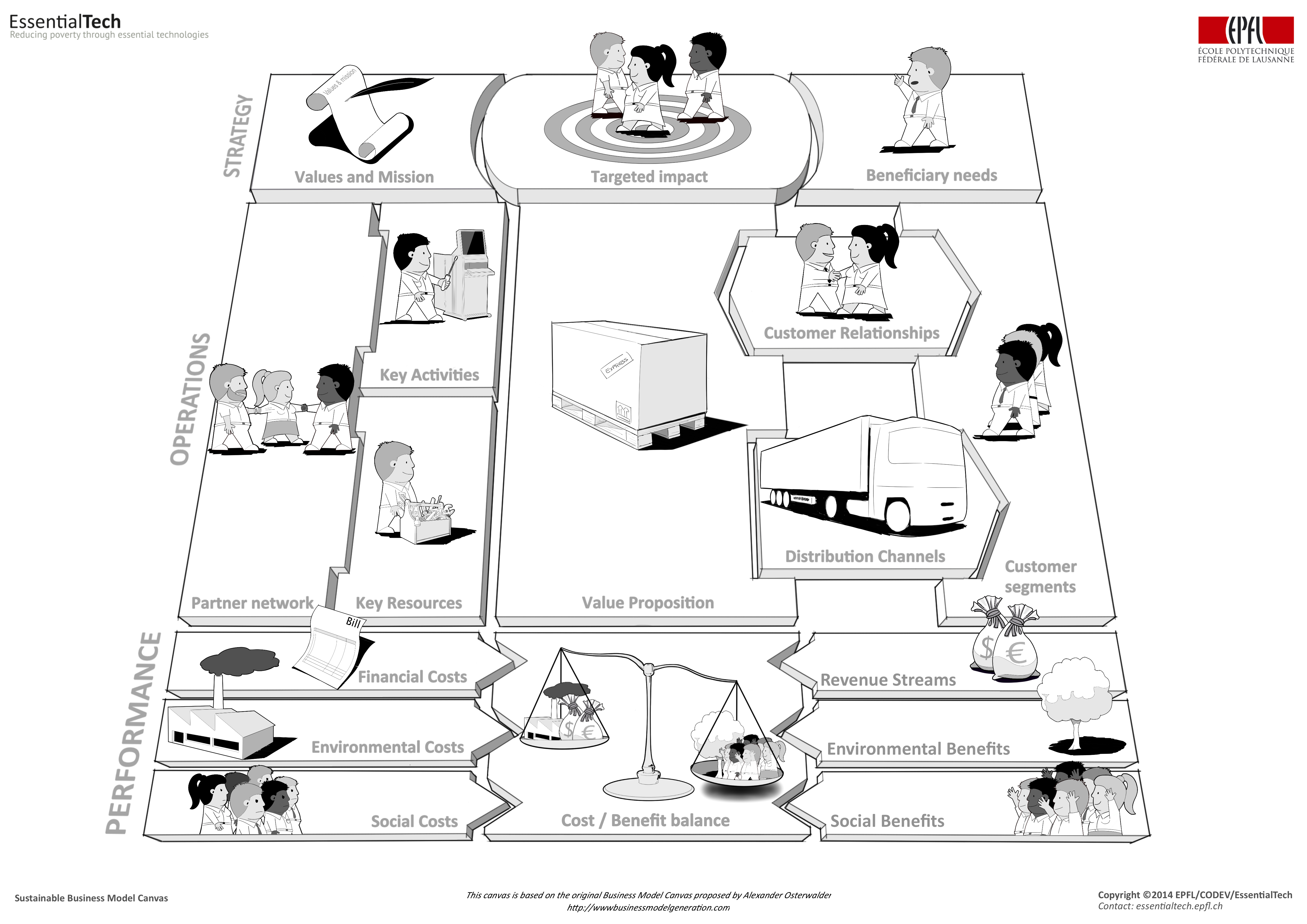
- Environmental and Social Costs (in addition to financial)
- Environmental and Social Benefits (in addition to revenue)
- Cost/Benefit Balance
Key Takeaways
- The business model is broader than just your product—it covers how you deliver value at an appropriate cost (p. 8)
- The BMC provides a shared language and structure for analyzing, designing, and innovating business models
- Use the canvas to clarify key assumptions and identify areas for improvement or innovation